LO(C)AI
Lab of Creative/Critical AI
“Making the invisible knowable through AI.”
MissionLO(C)AI is an independent research collective exploring how artificial intelligence can extend human knowledge in ways that are otherwise impossible. We develop and critically examine creative AI methods to reveal hidden patterns, narratives, emotions, and spatial relations across culture, heritage, art, memory, and society.We treat AI not only as a tool, but as a critical thinking partner—one that provokes questions, challenges dominant narratives, and exposes the limits and biases of data, algorithms, and human perspectives. Our work prioritizes open, low-cost, and reproducible experimentation accessible beyond institutional boundaries.
VisionLO(C)AI envisions AI as a means to reveal, question, and reimagine knowledge, rather than merely automate it.We aim to be a platform where:-AI brings visibility to remote, marginalized, or contested spaces-Creative AI practices surface emotional, political, and ethical dimensions of data-Critical AI research interrogates power, memory, sustainability, and representation-Independent researchers and communities experiment freely and responsibly
01
Echoes of Time: Lighting Up a Historic Fortress with ComfyUI
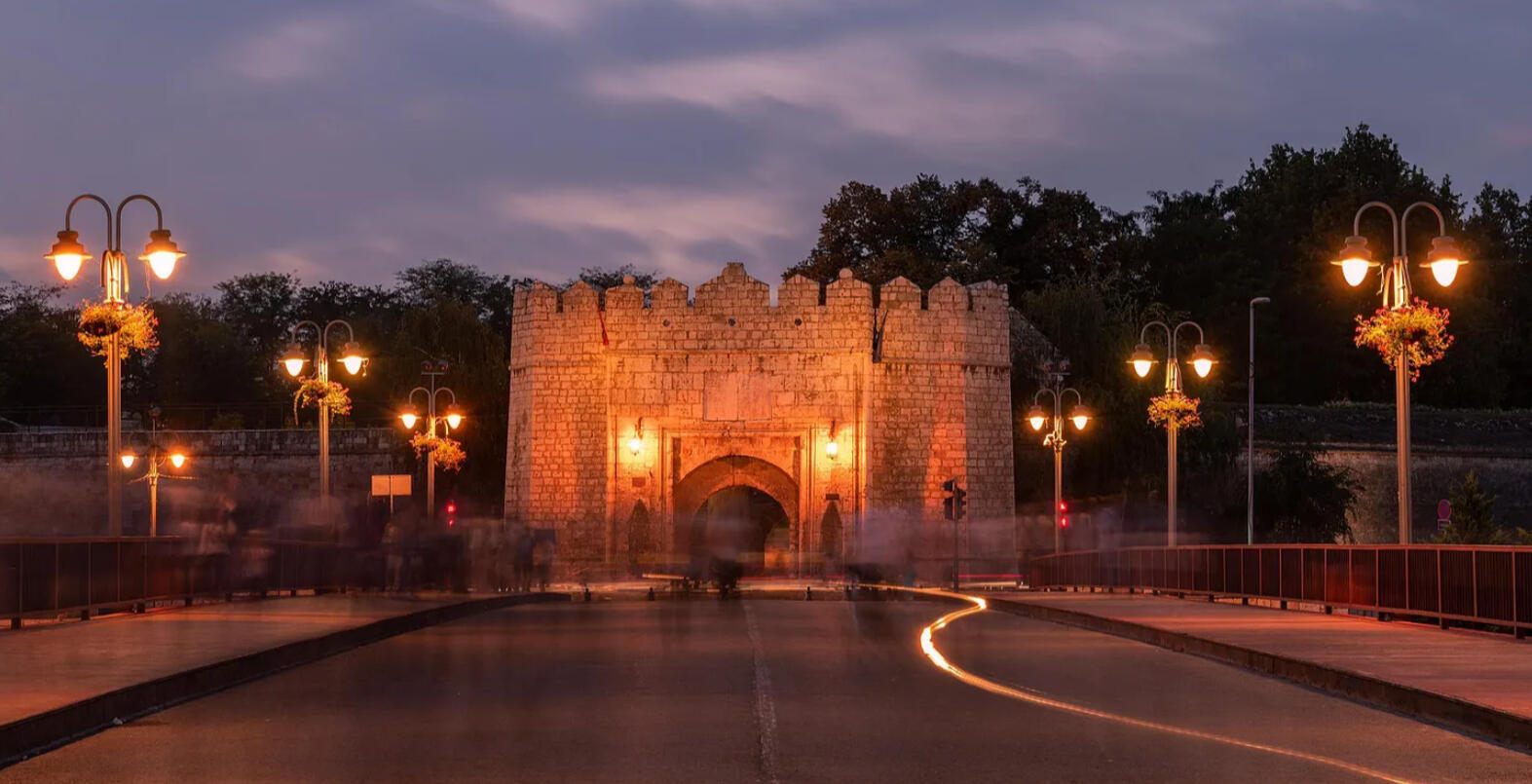
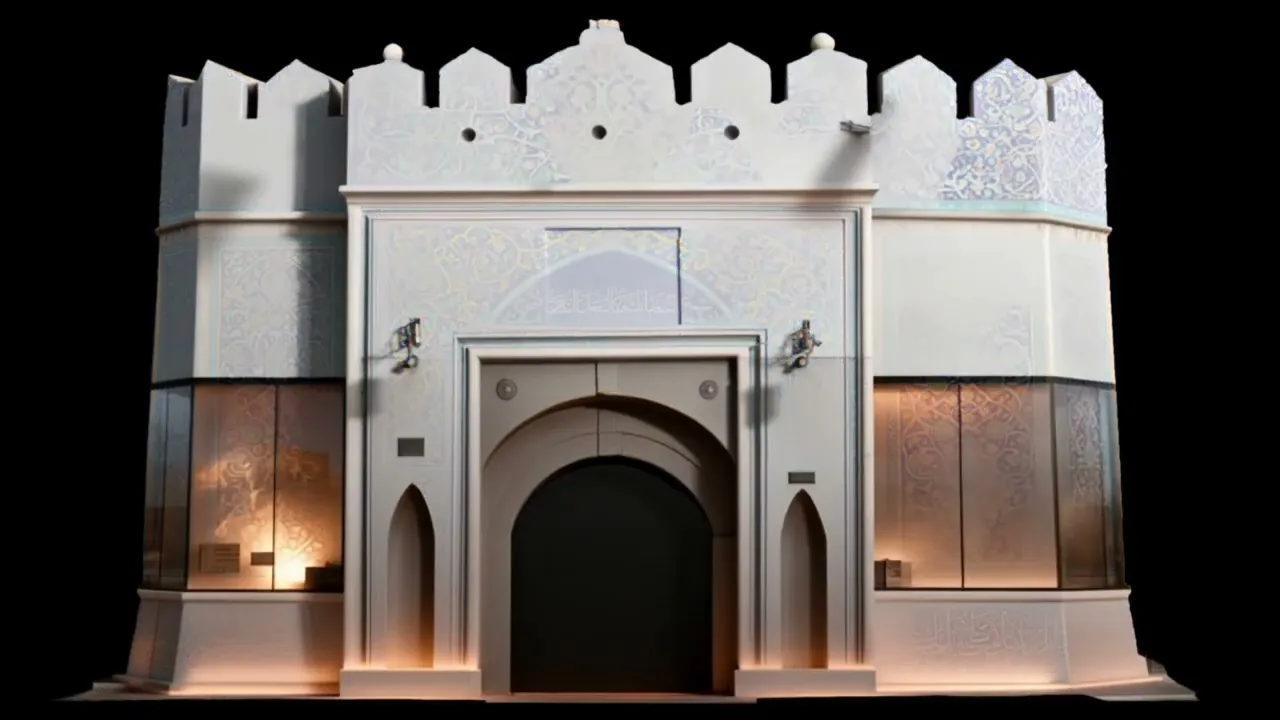
In response to the Echoes of Time call of the Comfy Challenge Season 1 finale—inviting artists to explore time as the convergence of past, present, and future through projection on the historic Niš Fortress of Serbia.we developed a single continuous animation that rejects linear or segmented storytelling. Rather than isolating historical layers or visual eras, our approach deliberately collapsed all temporal strata of the fortress into one simultaneous visual field: ancient stone textures, contemporary material traces, and speculative future geometries coexist, interfere, and transform each other in real time. This conceptual decision reflects our core interpretation of “echoes” not as sequence, but as co-presence of time experienced as accumulation rather than progression. Technically and conceptually, this synthesis would not have been achievable without the node-based logic and modular control of ComfyUI, which enabled us to orchestrate multiple generative layers, temporal feedback loops, and spatial transformations within a single coherent system. The result is not a representation of the fortress across time, but a temporal condition—an image-space where all moments are active at once, revealing how AI can make visible forms of temporal entanglement that are otherwise impossible to construct.

02
NEW LANDS
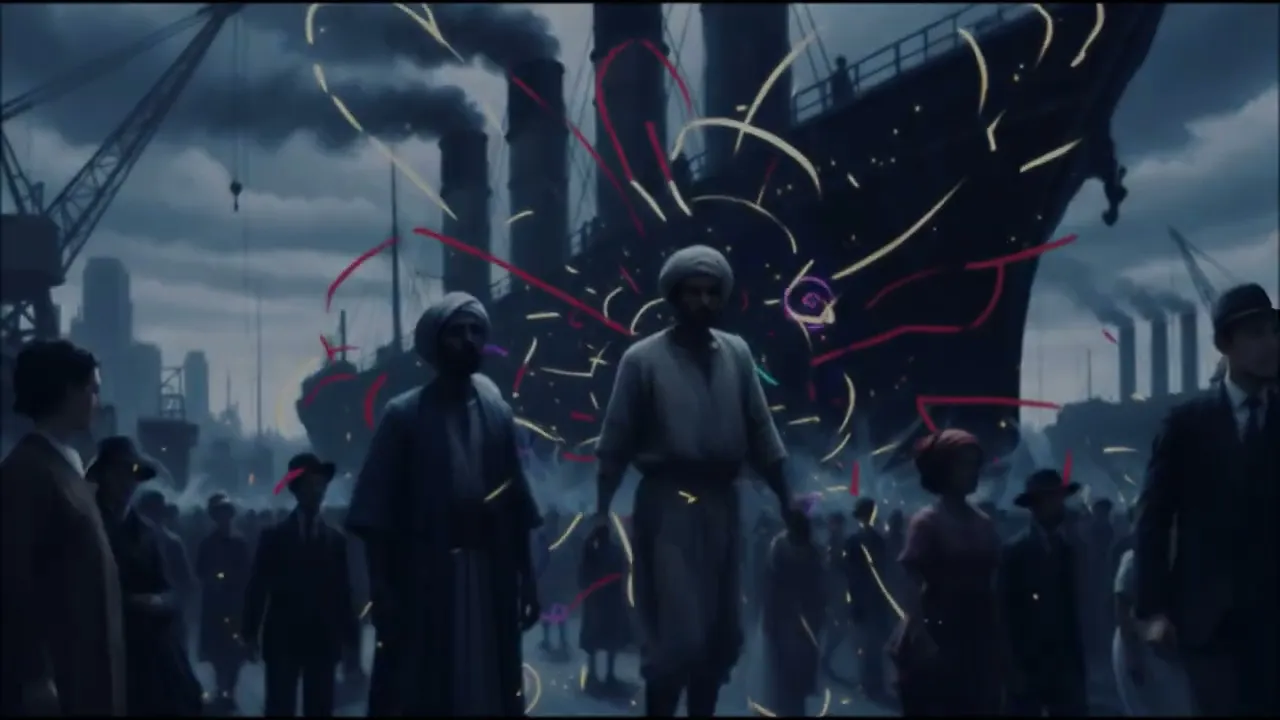
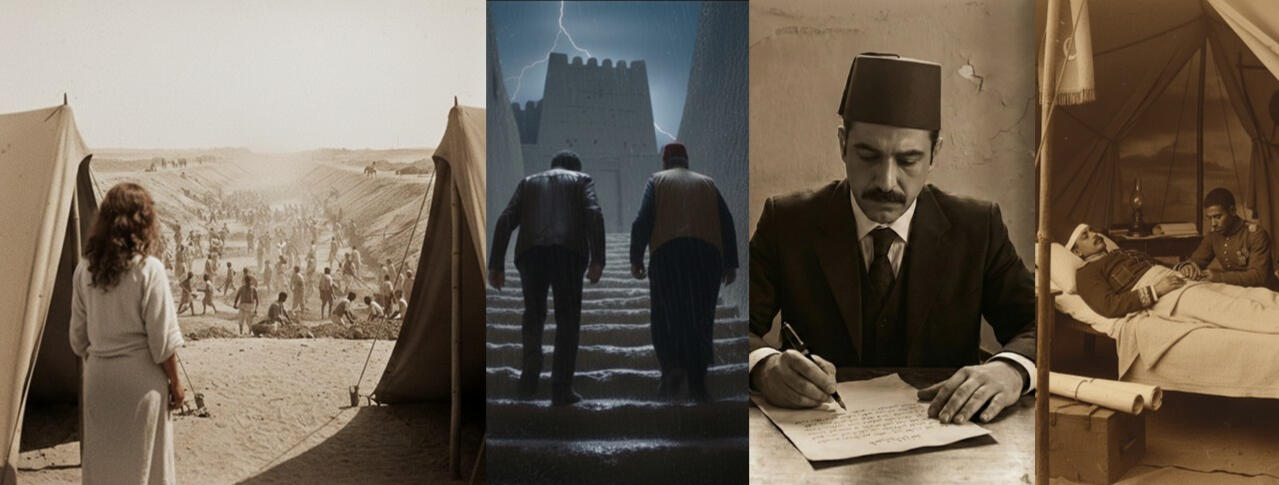
In response to the challenge of representing the largely undocumented experiences of the Egyptian Labor Corps during World War I, NEW LANDS adopts generative AI as both a creative medium and a critical research method. The project confronts a central absence: thousands of rural Egyptians were forcibly mobilized by the British war effort, yet their voices, images, and personal narratives remain largely erased from official archives. Rather than attempting a conventional historical reconstruction, the film embraces generative processes to address this archival silence.The methodology begins with historical and archival research, from which a fictionalized yet historically grounded narrative was developed around Mahmoud, an Egyptian farmer uprooted from the Nile Valley. This narrative served as a conceptual scaffold for visual generation. Using Gemini for early scene ideation and narrative visualization, followed by the generation and iterative refinement of more than 300 images in Midjourney, the project employed careful human oversight to ensure ethical alignment and historical plausibility. Abstraction, partial visibility, and faceless figures were used deliberately—not as aesthetic shortcuts, but as formal responses to missing records and erased identities.Through animation and montage, these generative images were woven into a cohesive cinematic language that conveys ghurba (dislocation), forced mobility, and the dehumanizing conditions of desert camps, ports, and distant labor zones. In this process, AI functions not as an authorial replacement, but as a collaborative instrument for speculative reconstruction—allowing marginalized histories to be visualized where documentation fails. NEW LANDS operates simultaneously as an animated film and a research experiment, demonstrating how generative AI can support ethical, participatory storytelling and contribute to the recovery of collective memory without claiming false historical completeness.
03
The Bauhausifier
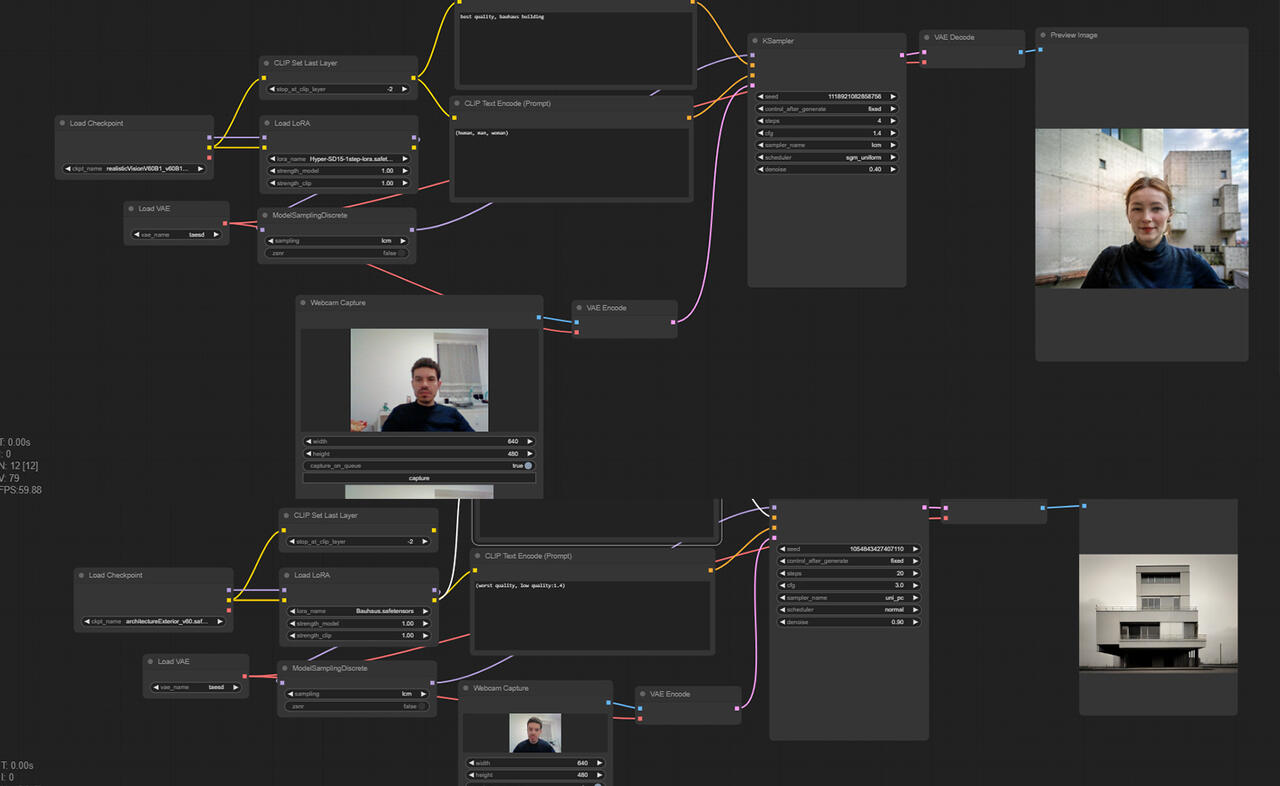
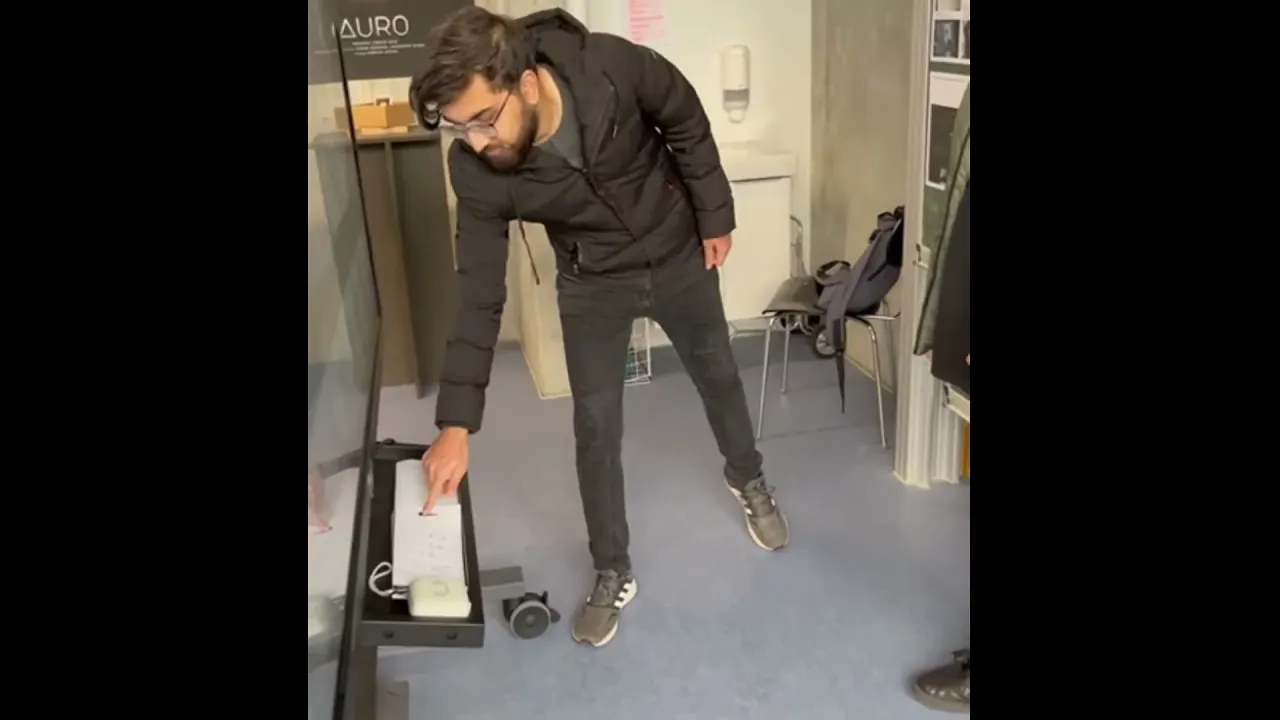
*Presented in Dessau Design Show 2025In response to the challenge of reactivating Bauhaus principles beyond static aesthetics for the Bauhaus 100 Years Jubilee, The Bauhausifier was presented as an interactive AI-driven installation at the Dessau Design Show, transforming human movement into real-time Bauhaus-inspired architectural forms. Rather than treating Bauhaus as a historical style, the project approached it as a living system of ideas—movement, abstraction, functionality, and the fusion of art and technology—reinterpreted through contemporary computational methods. Using a live camera feed, participants’ bodily poses were captured and processed by a locally trained AI model fine-tuned on Bauhaus architectural and visual data, ensuring conceptual fidelity rather than superficial stylistic imitation. Running entirely offline, the system translated spatial tension, balance, and rhythm in human gestures into generative architectural structures, while a secondary AI-based voice layer offered playful critical feedback, reinforcing a dialogic relationship between body and machine. By positioning the visitor as both performer and co-creator, The Bauhausifier demonstrated how AI can extend Bauhaus thinking into the present as a dynamic, embodied, and participatory practice rather than a retrospective homage.
04
Interactive Six-Session Workshop: AI & Hidden Histories of Modern Egypt
In collaboration with Khazanah School of Heritage in cairo, this six-session interactive workshop brought together nine participants to explore overlooked and marginalized events from modern Egyptian history through the creative and critical use of artificial intelligence. Moving beyond technical experimentation, the program guided participants through archival research, narrative development, visual generation, and ethical reflection, transforming historical documents, oral testimonies, and photographs into short visual stories. Using tools such as Gemini, MidJourney, CapCut, Windows Movie Maker, and Meta platforms, participants learned how to reconstruct and visualize hidden histories while maintaining historical sensitivity and responsible representation. The workshop became a collaborative lab for questioning not only what AI can produce, but how it should be used in shaping cultural memory and digital heritage.